


-
 2m 45sPart 2 | Session 1 Welcome & Introduction
-
20m 52sPart 2 | Session 2 SMART Trial 3-Year Results & Discussion
-
14m 9sPart 2 | Session 3 Women and AS, Thrombosis Impact & Discussion
-
23m 39sPart 2 | Session 4 Applying Results of the SMART Trial into Clinical Practice & Discussion
-
5m 25sPart 3 | Session 1 Welcome & Introduction
-
21m 41sPart 3 | Session 2 SMART Trial 3-year Data & Discussion
-
16m 3sPart 3 | Session 3 Women & AS, Thrombosis & Discussion
-
8m 1sPart 3 | Session 4 Applying Results into Clinical Practice
-
6m 24sPart 3 | Session 5 Faculty Discussion & Closing Remarks
-
3mPart 4 | Session 1 Welcome & Introduction
-
20m 3sPart 4 | Session 2 SMART Trial 3 Year Data & Discussion
-
15m 3sPart 4 | Session 3 Women & AS, Thrombosis & Discussion
-
14m 46sPart 4 | Session 4 Applying Results into Clinical Practice & Discussion
-
2m 46sPart 1 | Session 1 Welcome & Introduction
-
19m 43sPart 1 | Session 2 SMART Trial 3-Year Results & Discussion
-
14m 49sPart 1 | Session 3 Women and AS, Thrombosis & Discussion
-
10m 39sPart 1 | Session 4 Applying Results of the SMART Trial into clinical practice & Discussion
The Future of TAVR: 3-Year SMART Trial Results webinar series explores the key outcomes of the SMART Trial and what they reveal about improving care for patients undergoing transcatheter valve intervention.
The series focuses on how trial findings inform everyday clinical decisions, with particular attention to bioprosthetic valve dysfunction, prosthesis–patient mismatch and thrombosis. Special consideration is given to small annuli patients, including those with an annular area below 430 mm², and to women, where anatomy and haemodynamics can significantly influence outcomes. The discussion connects evidence to practice, highlighting how structured pre-procedural planning, imaging and patient selection can optimise results.

Key Learning Objectives
- Outline definitions and types of BVD, preventative strategies, and implications.
- Translate trial results into real-world clinical practice.
- Understand how pre-case planning, imaging, and tools can support patient selection.
- Identify indicators of low-flow, low-gradient severe aortic stenosis.
Target Audience
- Interventional Cardiologists
- Structural Heart Intervention Specialist
- Cardiac Imaging Specialists
- Cardiothoracic surgeon
More from this programme
Part 1
Monday 15th June - Session 1
Part 2
Tuesday 16th June - Session 2
Part 3
Wednesday 17th June - Session 3
Part 4
Thursday 18th June - Session 4
Faculty Biographies
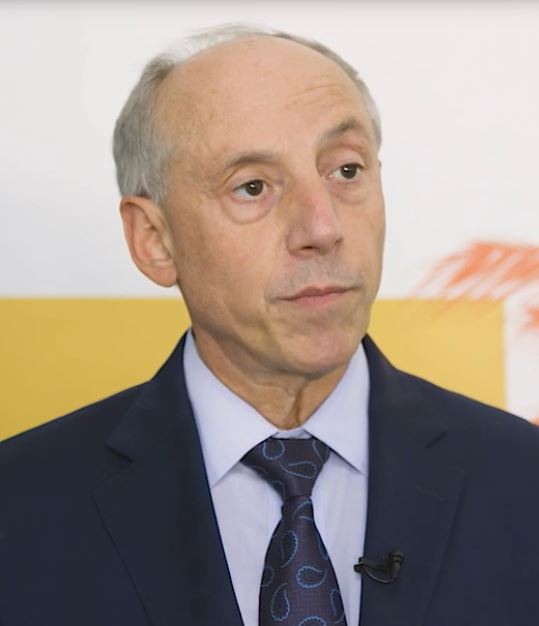
Howard C Herrmann
Director, Cardiac Catheterization Laboratories
Howard C Herrmann, MD, is a Professor of Medicine at the University of Pennsylvania School of Medicine and Director of Interventional Cardiology and the Cardiac Catheterization Laboratories at the Hospital of the University of Pennsylvania, Philadelphia. He has authored or co-authored more than 200 articles on numerous topics in interventional cardiology. His research focuses on the clinical investigation of new therapies for valvular and structural heart disease. He is Past President of the Pennsylvania Chapter of the American College of Cardiology (ACC) and serves on numerous national committees and Editorial Boards. Dr Herrmann earned his AB at Harvard College and his MD at Harvard Medical School, and completed his training at Massachusetts General Hospital.

Leonardo de Freitas Campos Guimarães
Interventional Cardiologist
Dr Leonardo de Freitas Campos Guimarães is an interventional cardiologist with advanced training in structural heart disease. He completed his medical degree and residencies in Internal Medicine, Cardiology, and Interventional Cardiology at UNIFESP (São Paulo, Brazil), where he also obtained a PhD in Cardiology. He further specialized through a Structural Heart Disease fellowship at the Institut Universitaire de Cardiologie et de Pneumologie de Québec (Université Laval, Canada).
Dr Guimarães currently practices as an interventional cardiologist at leading institutions in Brazil, including HCor and Hospital Santa Catarina, with extensive experience in TAVR, valve‑in‑valve procedures, and complex structural interventions. Since FY25, he has participated as a proctor in 149 proctoring cases in Brazil, demonstrating a high level of procedural expertise and leadership in physician training. In addition, Dr Guimarães has actively participated as a speaker in multiple…

Alejandro Alcocer
Associate Professor of Interventional Cardiology
Dr Alejandro Alcocer is Associate Professor of Interventional Cardiology at Hospital Regional 1° de Octubre, ISSSTE, Mexico City, México. He is the current President of ANCISSSTE (the ISSSTE National Cardiologists Association), the leading professional body representing cardiologists within the ISSSTE health system across Mexico. With over 20 years of experience in interventional cardiology, Dr Alcocer has built a distinguished career dedicated to advancing cardiac care in Mexico and Latin America.
Pablo Lamelas
Interventional Cardiologist
Interventional Cardiologist, Instituto Cardiovascular de Buenos Aires (ICBA)
His areas of interest have centered around Coronary, complex angioplasty, chronic total occlusion angioplasty and structural heart disease interventions.

Walid Ben Ali
Cardiac Surgeon & Structural Heart Specialist
Dr Walid Ben Ali, MD, PhD, FRCSC is a cardiac surgeon, researcher, and medical innovator at the Montreal Heart Institute (Institut de Cardiologie de Montréal) and Assistant Clinical Professor at the Université de Montréal Faculty of Medicine. Dr Ben Ali specializes in minimally invasive and percutaneous cardiac interventions, including transcatheter aortic valve replacement (TAVR/TAVI), robotic-assisted surgeries, and complex mitral and tricuspid valve repairs. He played a key role in expanding MHI's surgical capacity, contributing to a North American record where surgical teams performed mitral and tricuspid procedures on 23 patients within a single operating room in one week.
Comments